How much to charge for water spot removal
February 15, 2026


Pricing water spot removal can feel tricky until you know which levers move the number up or down. In San Diego, hard water, salt air, and strong sun collide, so quotes vary more than in milder regions. If you’ve wondered what a fair estimate looks like for water spot removal san diego, this guide breaks down the exact factors professionals weigh and the ranges you can expect as a car owner. You will learn how severity, affected surfaces, vehicle size, and process depth translate into time and price, so you can understand quotes with confidence.
Because local conditions matter, we’ll keep examples anchored to San Diego neighborhoods like La Jolla, Del Mar, Carlsbad, Chula Vista, and Rancho Bernardo. Along the way, you will see how Zs Clean San Diego LLC [Limited Liability Company] approaches transparency, uses premium, manufacturer-recommended products, and delivers mobile detailing to your location (driveway). Ready to price clearly and protect your paint from the next sprinkler surprise or sea breeze? Let’s get practical.
What it is: Water spots range from light mineral film that sits on top of the clear coat to heavy, etched stains that bond into paint or glass. Light film often responds to a pH [potential of hydrogen]-balanced wash and a dedicated water-spot remover, while etched spots usually need machine polishing or even multi-step paint correction. Severity is the single biggest driver of labor time and materials.
Why it matters: A light film can add 30 to 60 minutes to a job; heavy etching can add several hours because you are refining the surface safely instead of cutting corners. In San Diego’s high UV [ultraviolet] exposure and warm temperatures, minerals bake in faster, pushing more jobs into the “moderate” or “heavy” category, especially on darker colors that absorb heat.
Quick example: A light film on a white sedan’s hood in Carmel Valley may be a quick chemical treatment; etched rings on a black SUV [sport utility vehicle] in La Jolla often require compounding and polishing to restore gloss.
What it is: The surface you are treating determines both the chemistry and the tools. Paint typically needs decontamination, targeted spot remover, and often machine polishing. Glass may accept a more aggressive dedicated glass polish. Unpainted plastic trim reacts differently and can stain if the wrong acid is used; chrome needs gentle abrasives to avoid micro-scratching.
To help you better understand water spot removal san diego, we've included this informative video from Wilson Auto Detailing. It provides valuable insights and visual demonstrations that complement the written content.
Why it matters: Each surface has a different risk profile and time requirement. A windshield with baked-on minerals can take 45 to 90 minutes alone; a rear window with defroster lines requires careful technique to avoid damage. On paint, achieving a uniform, hologram-free finish after spot removal is what separates a quick fix from professional-grade results.
Quick example: A Mission Valley commuter sedan with spots on the windshield and front side glass only might see a $60–$120 glass-only add-on; the same car with spots over the hood and roof paint could add $120–$220 more for paint-safe correction.
What it is: Larger vehicles have more surface area and often more complex contours, roof rails, and glass acreage. Tall rooflines and ladder-required access increase setup time. Multi-pane panoramic roofs, chrome packages, and intricate body lines all slow down spot removal and polishing.
Why it matters: Time is the backbone of pricing. An extra hour or two across a large SUV [sport utility vehicle] or a crew-cab truck is common, especially when correcting both paint and expansive glass. Compact sedans with simple shapes are the fastest; three-row SUVs [sport utility vehicles] and lifted trucks take the longest.
Quick example: A compact sedan in North Park with light spotting may need a modest add-on; a full-size SUV [sport utility vehicle] parked near coastal sprinklers in Del Mar can require double the labor to reach the roof and treat glass properly.
Note: Ranges reflect typical San Diego 2025–2026 market observations; exact quotes vary by severity, color, and access.
What it is: Fresh spots sit on the surface; weeks-old spots often etch. Prior DIY [do it yourself] scrubbing with kitchen pads or aggressive acids can scratch clear coat or glass, adding repair steps. Some store products are labeled for glass only yet get used on paint, causing dull patches that then require machine refinement.
Why it matters: Damage recovery costs more than prevention. If abrasives or harsh acids were used, a pro may need compounding, refining, and sometimes localized sanding to level defects safely. That pushes the job from “spot removal” into “paint correction,” which is more time intensive yet essential for a uniform finish.
Quick example: A sprinkler mist on a new white SUV [sport utility vehicle] in Poway treated within a day might add $50–$120; the same SUV [sport utility vehicle] after a month of sun with DIY [do it yourself] attempts may require $250–$450 to correct and blend properly.

What it is: San Diego municipal reports often show TDS [total dissolved solids] between roughly 250 and 400 ppm [parts per million], which means more minerals are left behind as droplets dry. Add coastal salt, year-round UV [ultraviolet] exposure, and canyon dust, and you get spots that etch quickly and bond stubbornly to paint and glass.
Why it matters: Environment sets your baseline. Coastal parking, dark paint, and midday sun combine to raise severity and time. Seasonally, late summer and Santa Ana winds spread dust that fuses to mineral rings, and winter sprinkler schedules can quietly pepper a panel daily if a sprinkler points just a bit too far.
Quick example: A La Jolla street-parked vehicle exposed to ocean breeze and landscaping overspray might carry a $25–$75 coastal-exposure adjustment; if the hood shows etched rings baked by high UV [ultraviolet], add another $50–$120 for extra machine time.
What it is: Seeing scenarios helps calibrate expectations. These examples reflect what many San Diego drivers encounter, with ranges that blend labor, chemistry, and machine work. Transparent quotes should specify surfaces, severity, and protection options, so you can compare apples to apples.
Why it matters: Clarity prevents surprises and avoids high-pressure add-ons you do not need. Zs Clean San Diego LLC [Limited Liability Company] emphasizes upfront pricing, honest recommendations tailored to your car and lifestyle, and no upselling. Their in-house trained technicians use top-tier, manufacturer-recommended products rather than low-grade or off-label choices, ensuring consistent results.
Quick example: Use the table below to benchmark your situation, then ask for a written scope that mirrors the steps shown.
What it is: A smart workflow escalates only as needed. Start with a lubricated wash, iron/fallout decontamination if appropriate, targeted water-spot chemistry, and then evaluate. If etching remains, move to machine polishing with the least aggressive pad and polish that gets the job done. For severe staining, compounding then refining restores clarity and gloss.
Why it matters: Process discipline protects your clear coat and wallet. Over-aggressive acids can stain trim; jumping straight to heavy compounding removes more clear coat than necessary. Zs Clean San Diego LLC [Limited Liability Company] trains technicians in-house and uses manufacturer-recommended chemistry and pads, applying measured correction inside a clean, controlled workspace when needed for consistency.
Quick example: A black Escondido commuter car with etched spots may require a localized compound then a full-panel finishing polish to blend perfectly, rather than a quick hit that leaves halos in bright sun.
What it is: After you remove spots, you can leave the surface bare, apply a wax or polymer sealant, or step up to a ceramic coating that forms a harder, more hydrophobic layer. Ceramic coatings resist bonding of minerals and ease removal during washes, especially valuable in high TDS [total dissolved solids] areas.
Why it matters: Protection reduces come-back spotting and makes maintenance faster. In San Diego’s sun and salt, hydrophobic layers shed water more completely, reducing mineral footprints. While ceramic costs more upfront, many owners recoup value in saved correction time and less frequent heavy polishing over the next 12 to 24 months.
Quick example: A coastal Del Mar driver who parks outdoors may save several spot-removal visits by coating once, especially if combined with routine maintenance washes that respect the coating’s chemistry.
Pro insight: Zs Clean San Diego LLC [Limited Liability Company] specializes in paint correction and ceramic coating. They match coating type and layer count to your driving patterns, and they explain care routines clearly to preserve warranties and performance.
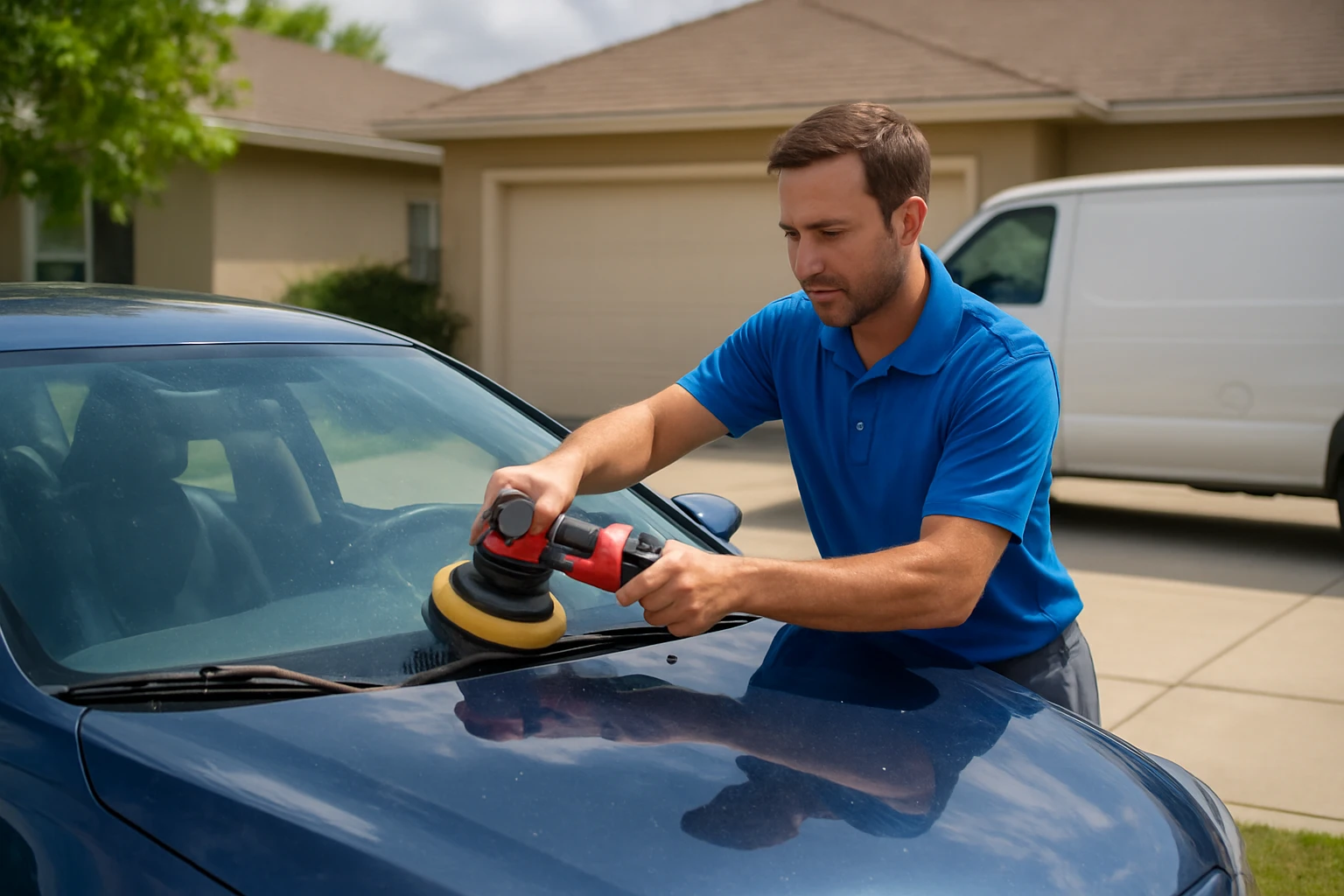
What it is: Convenience has value. Mobile detailing delivered to your location (driveway) saves time and prevents spots from reforming on the drive home. For delicate multi-step correction, a controlled workspace ensures consistent temperature, lighting, and dust control; pros may recommend it for the highest gloss and tightest tolerances.
Why it matters: On-site service reduces your downtime and helps monitoring in natural light, great for validating results where you actually park. For complex corrections, a clean bay with color-correct lighting can shave time and improve finish quality. Zs Clean San Diego LLC [Limited Liability Company] offers both options, guiding you to the right setting without upselling.
Quick example: A Chula Vista commuter with a tight schedule books mobile; a collector in Rancho Santa Fe opts for a controlled environment for a multiday polish and coating.
What it is: Sun angle, wind, and temperature influence both spotting and removal. High midday UV [ultraviolet] bakes minerals quickly; wind spreads dust onto fresh panels; summer heat shortens working time for chemicals. Early morning or late afternoon windows are ideal, especially outdoors.
Why it matters: Smart scheduling reduces rework and preserves your finish. If you plan to coat after removal, curing conditions matter even more. Pros who respect weather windows and bring shade, airflow, and proper lighting get repeatable results with less risk.
Quick example: Booking a mobile service in the early morning in Encinitas when panels are cool and winds are light increases success rates and reduces the chance of streaking or repeat spotting during the job.
Use this short framework to land on the right scope the first time:
Tip: Zs Clean San Diego LLC [Limited Liability Company] provides transparent pricing with no upselling and honest recommendations tailored to your car and lifestyle. Their in-house trained technicians select top-tier, original equipment manufacturer [OEM] recommended products and can work in a clean, controlled workspace or right on your driveway for maximum convenience.
San Diego Pricing Snapshot: For many daily drivers, expect $140–$240 for light film on select panels, $320–$520 for moderate multi-surface work, and $480–$780 for heavy etched cases. Adding an entry ceramic coating ranges from about $500 to $1,000+ depending on vehicle size and paint condition.
Have a specific case in mind? Think about where you park, how long spots have sat, and whether DIY [do it yourself] attempts were made. Then request a written scope that mirrors the steps in this guide so you can compare like for like across quotes.
Fair pricing for water spot removal starts with severity, surface, and a process that fixes the cause without risking the finish.
Imagine getting your clarity back and keeping it that way for the next 12 months with smarter scheduling and the right protection for San Diego’s sun, salt, and dust. What would it feel like to see crisp reflections instead of rings the next time you walk up to your car?
When you are ready, ask for a clear, step-by-step quote for water spot removal san diego that matches your car, your parking reality, and your long-term plans.
Book trusted water spot removal san diego, with mobile detailing delivered to your location (driveway), protecting paint for coastal drivers while keeping service transparent and pressure-free.
Remove Spots Now




ZS Clean is committed to your satisfaction and your comfort. We tailor our service system to make your life simpler and easier—saving you time and giving you peace of mind.