Santa Ana Season Is Coming for Your Car — Here's the Playbook
No items found.
September 20, 2026

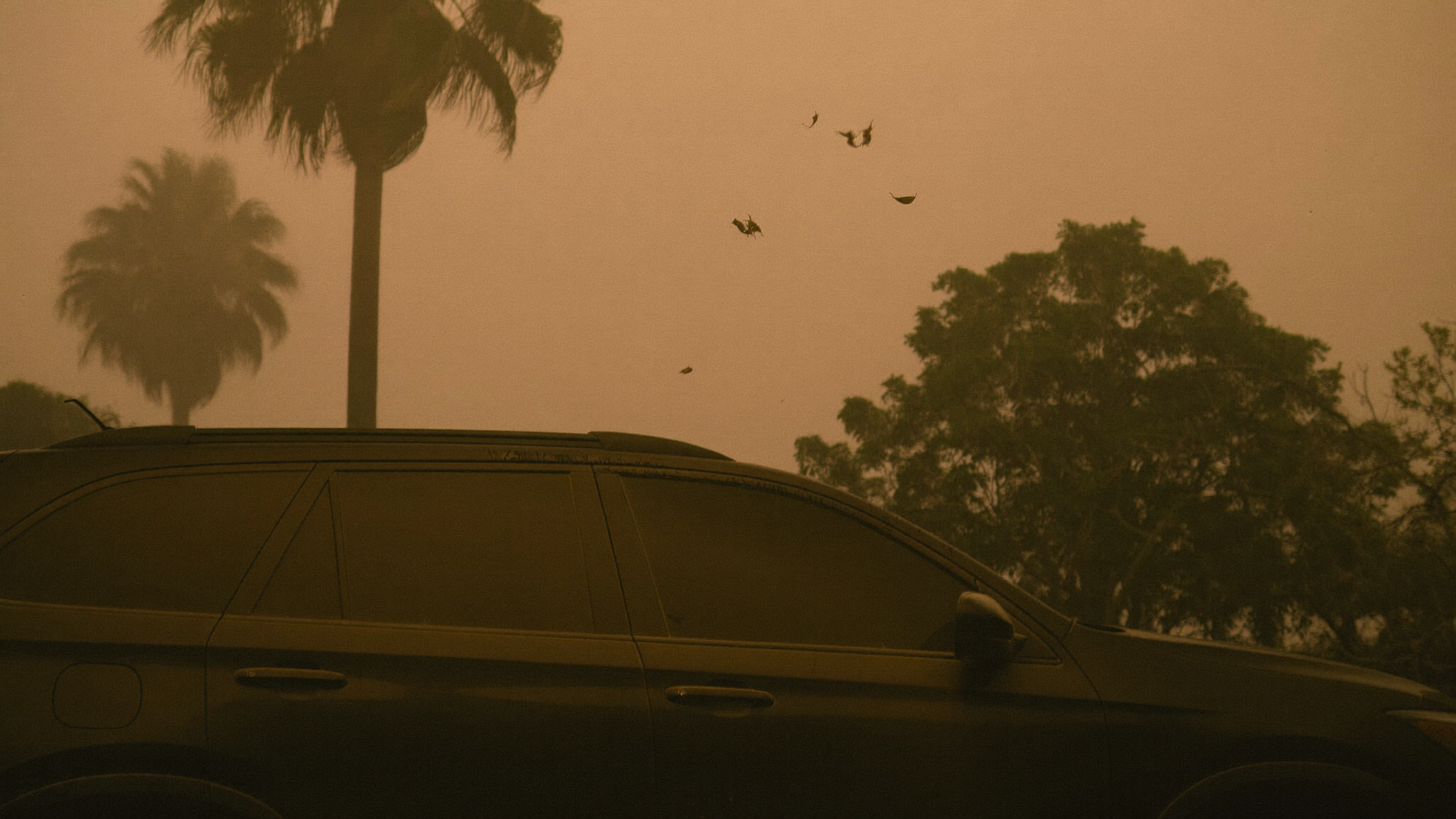
You know the feeling. Some night in October the air goes still, then warm, then the wind starts blowing the wrong direction. Your lips chap. The door handle zaps you. The whole county gets slightly irritable.
And your car — which was clean on Friday — wakes up wearing a full coat of canyon dust like it slept in a construction site.
That's Santa Ana season, and after a few years of detailing through them in North County, I can tell you the winds keep me busier than any other week of the year. Not because of the dust itself — because of what people do to the dust. So before the first red flag warning of the fall, here's the playbook.
A Santa Ana is desert air coming downhill in a hurry — hot, bone dry, sometimes gusting past 50. For your car, that means four separate problems arriving at once.
The dust is moving, not falling. At freeway speed, fine grit in the air works like a very slow sandblaster on your hood, bumper, and mirrors. The dry air also loads everything with static, so the dust doesn't just land on your paint — it clings to it.
Everything opens up. That fine powder finds the door jambs, the trunk seams, the cowl under your wipers, and every vent it can reach.
The trees start throwing things. The same eucalyptus that charges you the shade tax in sap all summer starts dropping actual limbs when the gusts arrive. Eucalyptus shed branches in high wind like it's a hobby. Parking under one during a wind advisory is a bet I wouldn't take.
And the timing is rude. Your paint spends all year fighting salt in the coastal air — moisture's version of the attack. Then for one week the wind flips offshore and your car gets the desert version instead. Same victim, opposite weapon.
Some Santa Ana weeks stay dusty and annoying. Some come with fire somewhere upwind, and then what lands on your car looks like dust but behaves like chemistry.
Wildfire ash is what's left after plants burn, and it's loaded with alkaline compounds. Sitting there dry, it's abrasive but mostly patient. The trap springs when the winds die and our marine layer comes back — because the moment dew hits that ash, you've got a mildly caustic paste sitting directly on your clear coat, etching quietly overnight. It spots chrome. It marks glass. It does its best work while you're asleep.
Dry ash is a threat. Damp ash is a verdict. That's why the 24 to 48 hours after an ash event matter more than the event itself.
Mistake #1: The dry wipe. The duster, the towel flick, the sleeve, the kid writing WASH ME on the tailgate. Dragging dry grit — or worse, ash — across paint is a slow scratch job with extra steps. This is the single biggest source of the swirl marks I get called out to fix every fall.
Mistake #2: The courtesy mist. A quick spray from the hose to "knock the dust down" is the worst of both worlds — not enough water to carry the grit off, exactly enough to activate the ash. If you're not going to rinse it properly, leave it dry.
Mistake #3: The cover over a dirty car. A car cover strapped over a dusty car is a sandpaper burrito. Every gust grinds the fabric against the grit against your paint. Covers go on clean cars only.
Mistake #4: Wipers on an ashy windshield. One dry swipe grinds ash into the glass and shreds the edge off your blades. Rinse the windshield first, always — your wipers will live to see the rain in December.
When the winds finally quit, here's the order of operations. The theme is simple: water does the work, your hands come last.
Step 1: Flood first, touch nothing. Rinse the entire car top-down with real water volume — a hose with your thumb over the end beats a fancy nozzle on mist. You're floating the grit off, not pushing it around. Rinse until the runoff stops looking like chocolate milk.
Step 2: Soap before any towel touches paint. A pH-neutral car shampoo, foamed or in a wash bucket, with a second bucket just for rinsing your mitt. Straight lines, light pressure, rinse the mitt constantly. Every pass with a dirty mitt is Mistake #1 wearing a disguise.
Step 3: Flush where the ash hides. The cowl under the wipers, door jambs, mirror pockets, trunk seams. Ash drifts collect there and wash back across your clean paint on the next drive if you skip them.
Step 4: Do the glass and blades by hand. Wipe the wiper blades with glass cleaner on a towel until the towel comes back black-free. Then the windshield. Then, and only then, are your wipers allowed back on duty.
Step 5: Dry it and read the paint. Once it's dry, look across the hood in low light. Ghost spots or dull rings that survived the wash aren't dirt — that's etching, and no amount of washing fixes a texture problem. That's paint correction territory, and the sooner it's assessed, the shallower the fix.
Step 6: Put protection back on. A thorough decon wash takes some of your wax or sealant with it. Top the panel back up. And if your car wears a ceramic coating, this whole process gets easier — the ash sits on the coating instead of in your clear coat and releases with far less fight. It doesn't make you ash-proof. Nothing does. It buys you margin, and margin is the whole game in fire season.
One interior note: on smoky days, run your AC on recirculate, and when the season's over, swap the cabin air filter. It's been quietly eating everything the wind threw at it, and it holds a grudge.
While the wind is actually blowing, the honest advice is: do less.
A garage wins everything. No garage? Park away from the big eucalyptus and pines, and put the building between your car and the wind if you can. Don't wash mid-event — it'll be recoated by morning and you'll have stripped your protection for nothing. Don't cover a dirty car. Just wait, let the desert do its thing, and plan the flood rinse for the still morning after.
The car can survive a dusty week. It's the cleanup shortcuts that leave scars.
The week after a Santa Ana — especially an ash event — is when we run more decon washes than any other time of year. If your car sat out through the dew cycle with ash on it, or the hood has that post-wind haze that won't rinse off, that's exactly what a full exterior detail is built for, and we do it in your driveway. We'll tell you straight whether you're looking at a wash, a decon, or a spot that needs actual correction — in that order, never the reverse.
The wind always wins the week. It doesn't have to win the paint.
So when the air goes still and strangely warm some night this fall — that's your cue. Charge the hose, check the trees you park under, and leave the duster in the garage where it can't hurt anyone.
And maybe give the eucalyptus a little extra room this month. It's about to start throwing more than sap.



ZS Clean is committed to your satisfaction and your comfort. We tailor our service system to make your life simpler and easier—saving you time and giving you peace of mind.