Why Your Front Wheels Are Always Filthier — and How to Fix It for Good
September 30, 2026

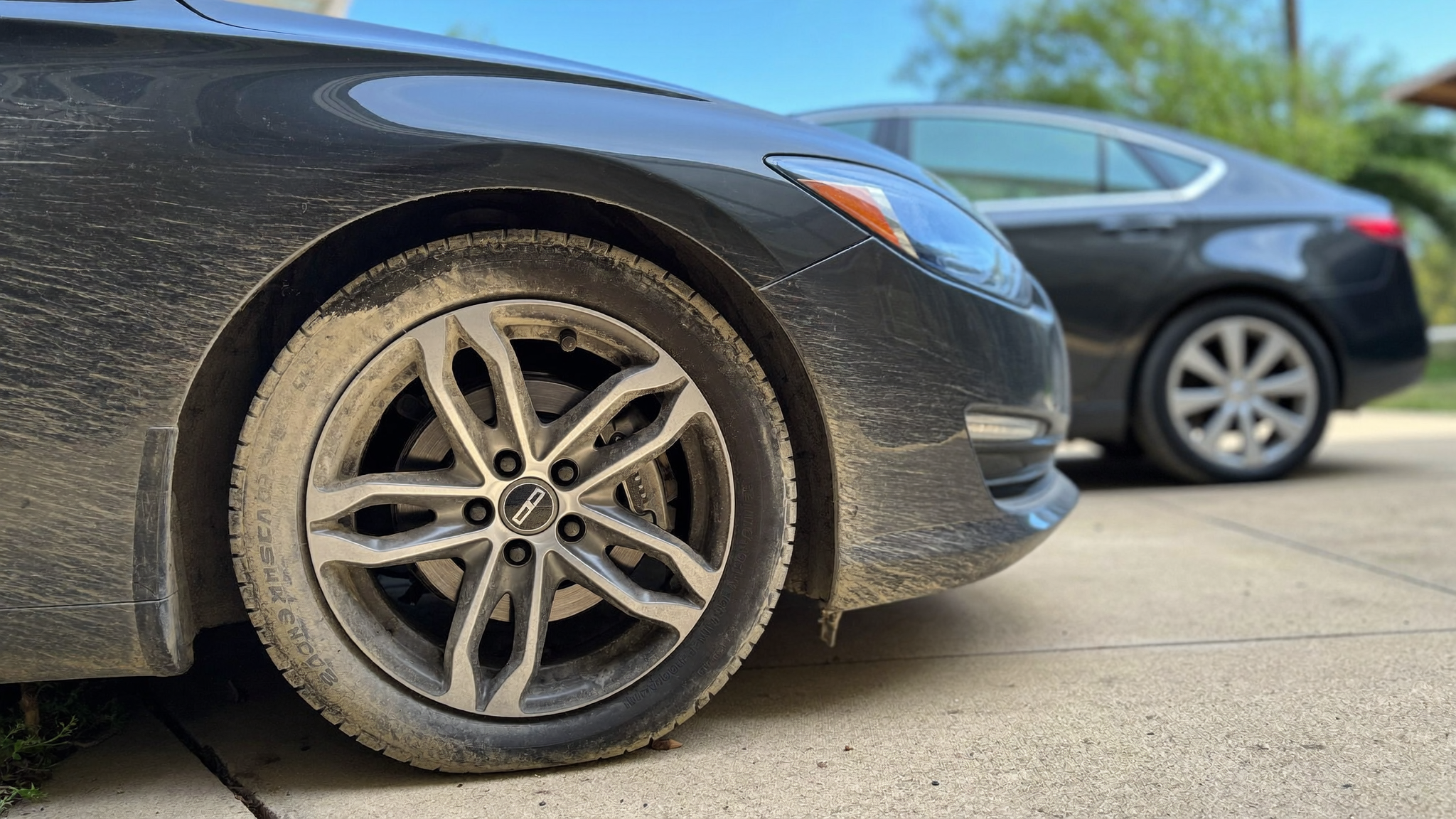
Quick answer: That black film on your wheels is a mix of worn brake-pad and rotor material, often rich in iron. Your front brakes usually handle more of the stopping load, so your front wheels often wear it worst. Fresh dust rinses off. Older dust bonds to the wheel and needs a dedicated wheel cleaner, and embedded dust needs an iron remover before it corrodes the finish. The full method — and the cleaner-aisle decoder table — is below.
Walk down any parking row in San Diego and you'll see the same crime scene on almost every car: rear wheels that look okay, front wheels that look like they've been through a house fire.
Most people assume their front wheels are just "where the dirt goes." Not quite. The dirt on your front wheels is your car eating itself, one stop at a time — and I mean that almost literally. After years of detailing wheels across North County, this is the thing I most wish every car owner understood, because the fix is cheap, the neglect is expensive, and the whole story is honestly kind of fascinating.
Buckle up. Wheel nerd time.
Every time you press the brake pedal, your pads clamp a spinning iron rotor and grind a little bit of both into powder. That powder is brake dust, and it isn't "dust" the way dirt is dust — it contains particles worn from both pads and rotors, often rich in iron, with the mix depending on the braking materials. It leaves the rotor hot, flies off at wheel speed, and lands on the nearest surface: your wheel.
Hot metal particle, cool painted surface. The particle doesn't just sit there — it sticks, and given time, it embeds into the wheel's clear coat like a splinter. Then San Diego's coastal air gets involved, the iron starts to oxidize, and you get those small orange freckles and rough patches that no car wash ever seems to remove. This isn't a cosmetic problem wearing a mechanical costume — it's corrosion in progress. (If you think nobody serious pays attention to brake dust, the EPA literally tracks brake wear as an air emissions source. It's real particulate, and your wheels are the first thing it lands on.)
Physics, and it's the fun kind.
When you brake, the car's weight pitches forward — you feel it as the nose dipping. That weight transfer puts more braking load on the front tires, so front brakes usually do more of the stopping work. The exact split depends on the vehicle and the braking conditions. More friction-brake work can mean more dust, which helps explain why the fronts often look worse.
So no, you're not imagining it, and no, your rear wheels aren't "staying cleaner." Your fronts are just doing most of the dying. Cars with big open-spoke wheels show it fastest because you're seeing the caliper and the dust it throws at point-blank range.
Two bonus facts while we're here. Pad formulation makes a big difference: some performance-oriented pads leave more visible dust, while ceramic low-dust formulations are designed to reduce it. The badge alone doesn't tell you which pads a car has. And hybrids and EVs often use their friction brakes less because of regenerative braking, so they can produce less brake dust. They still use their pads, though — regeneration can be limited, and the friction brakes remain part of the system.
There isn't a fixed countdown from dust to damage. Finish condition, heat, moisture, driving and cleaning habits all matter. Think of these as conditions to look for, not deadlines:
| Condition | What you may see | What it may take to remove |
|---|---|---|
| Fresh, loose dust | A light surface film | Car shampoo, water and gentle cleaning |
| Stubborn buildup | Layers that survive a normal wash | Finish-compatible wheel cleaner + gentle brush agitation |
| Bonded iron contamination | Specks or roughness that remain after washing | A compatible iron remover used according to its label |
| Damaged finish | Pitting, peeling or corrosion under the coating | Professional assessment; cleaning cannot repair the finish |
That last row is the one that stings. I've seen plenty of wheels where the "dirt" turned out to be permanent damage, and a set of wheels refinished or replaced costs hundreds to thousands. The $20 of prevention below is one of the best deals in car care.
The cleaner aisle is genuinely confusing, so here's the honest version of what each type is for:
| Cleaner type | What it actually does | When it's the right call | Watch out |
|---|---|---|---|
| Car shampoo (pH-neutral) | Removes fresh, loose dust | Weekly upkeep, sealed or ceramic-coated wheels | Won't touch anything bonded |
| Dedicated wheel cleaner (often alkaline) | Removes stubborn brake dust and road grime | Deeper cleaning when approved for your wheel finish | Check finish compatibility and label dwell time; never let it dry |
| Iron remover (color-changing) | Reacts with iron contamination so it can be rinsed away | Bonded iron that survives a normal wash | Check finish compatibility; use only as directed and never let it dry |
| Acid-based cleaner | Removes heavy buildup on compatible finishes | Specialist cleaning with the right product and precautions | Can damage incompatible finishes and cause injury; follow label and protective-equipment instructions |
The iron remover deserves a special mention because it's the most satisfying product in detailing: spray it on, follow the label's dwell time, and watch the color change where it reacts with iron. That color is a chemical receipt — iron contamination being loosened so it can rinse away. The first time clients see it, someone always says "oh no." Oh yes.
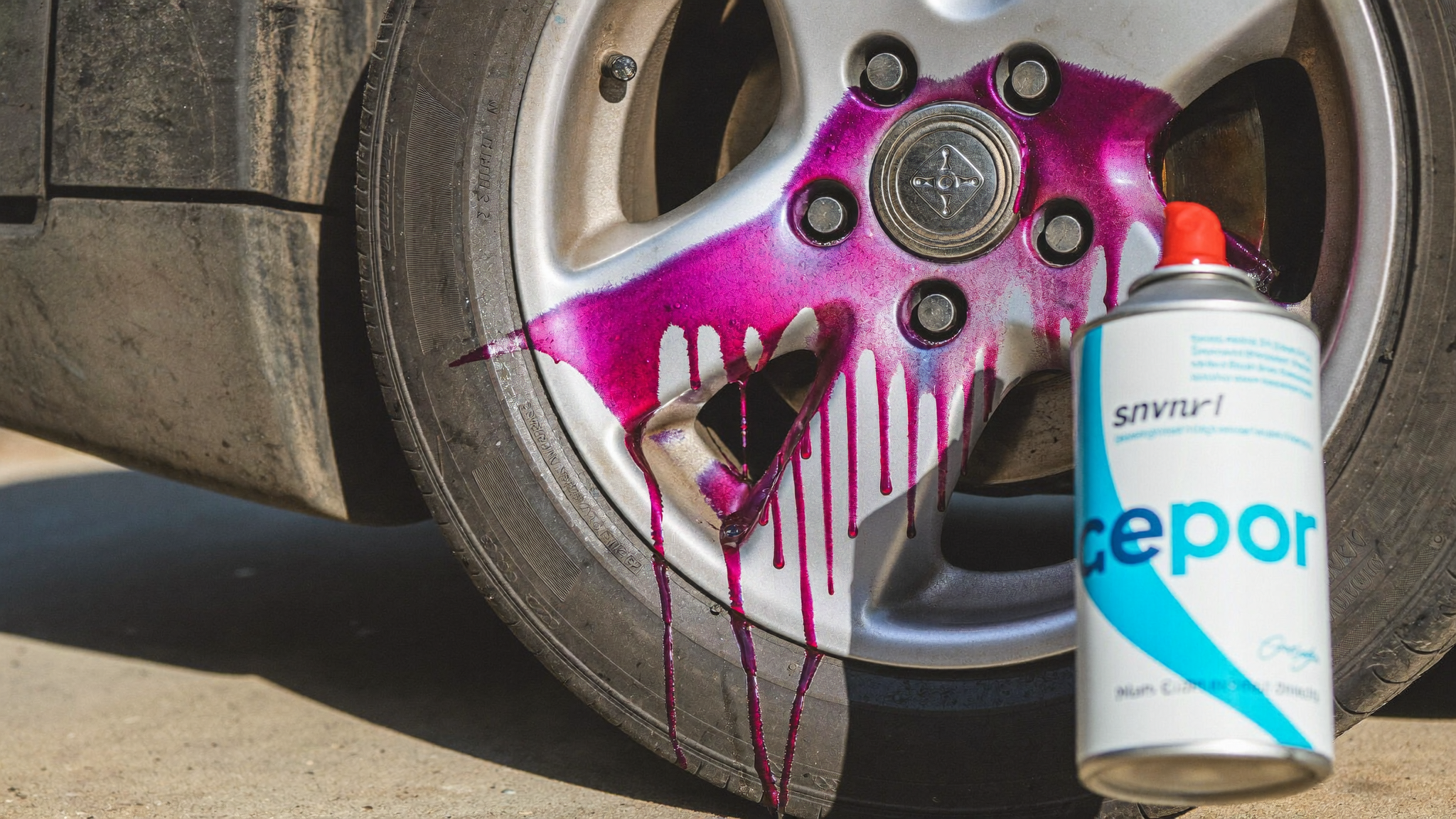
And a word on the acid row: the wrong cleaner can wreck a finish, but pH alone doesn't tell the whole story. Some acidic cleaners are approved for painted or lacquered wheels; others can etch bare or polished metal. Non-acid cleaners can be strongly alkaline, too. Don't guess from "instant results" or the absence of "pH-balanced" on a bottle. Match the product to your exact wheel finish, follow the label and test an inconspicuous area first.
Order matters: wheels first, always. Wheels are the dirtiest thing on the car, so they get cleaned before the paint — with their own bucket, their own mitt, and their own brushes. Share a wash mitt between wheels and paint and you'll grind metal particles into your clear coat, which is how mystery swirl marks are born.
Step 1: Only ever clean cool wheels. After a drive — especially down something like the Torrey Pines grade or Del Dios Highway — your rotors and wheels are hot enough to flash any cleaner dry into stains. Park, wait, then work.
Step 2: Rinse first. Flood the wheel and the wheel well. Everything loose leaves now, so your brush isn't dragging grit later.
Step 3: Cleaner on, let it dwell, then agitate. Choose a cleaner approved for your wheel finish, follow its dilution and dwell-time instructions, and never let it dry. Use the protective equipment specified on the label. Then go in with three brushes: a soft-bristle brush for the face, a long barrel brush for the inner barrel (where most of the dust actually lives), and a small detail brush for the lug areas. Gentle pressure — the chemicals are doing the work.
Step 4: Iron remover for the freckles. If specks or rough patches survive step 3, bonded iron may be the culprit. Use a compatible iron remover according to its label, agitate gently if directed, then rinse thoroughly. Treat contamination when needed rather than assuming every wheel needs a fixed monthly or quarterly treatment. If the finish is peeling or pitted, cleaning won't repair it.
Step 5: Rinse like you mean it, then dry. Leftover cleaner spots wheels the way hard water spots paint. Dry with a towel that is — you guessed it — only for wheels.
Step 6: Protect, so next time is easy. A wheel sealant or a ceramic coating on the wheel faces changes the entire game: brake dust lands on the protection instead of the clear coat, and next week's cleanup can be easier, though regular washing is still needed. This is the same logic as coating paint, just pointed at the part of your car that takes the most abuse. It's also the step almost everyone skips — and one way to make regular wheel maintenance less work.
One honest note on tire shine while we're down there: use a water-based dressing and wipe off the excess. Too much dressing, or driving before it has set as directed, can sling product onto your clean wheels and lower panels. Keep dressing off tire tread and brake components.
Our cars live a specific life: salt-heavy coastal air that accelerates iron corrosion, canyon commutes with long braking grades that generate extra dust, and now — right as wind season kicks up — a county's worth of airborne grit joining the party. Fall is genuinely the season wheels get away from people here: more dust, more moisture at night, less daylight to notice it happening.
It's also why wheels are the first thing I look at when I pull up to a new client's car. Wheels are the tell. They're the part everyone sees and nobody maintains, and they age a car faster than any other single surface.
Every full exterior detail we run includes proper wheel decon — cleaner, iron remover, barrels, wells, the whole protocol above, in your driveway. If you want the long-term fix, ask about adding ceramic protection to the wheel faces while we're there; it's a small add-on that pays for itself in every wash after. And our monthly clients never deal with the timeline table at all — their fronts match their rears year-round, which, as you now know, is deeply unnatural.
Is brake dust dangerous to breathe? It's fine metallic particulate, so don't create clouds of it — no dry brushing, no compressed air on dry wheels. Use a wet cleaning method and avoid breathing mist or spray. Wet cleaning reduces airborne dust; it doesn't make every exposure harmless.
Will vinegar or household cleaners work on wheels? Vinegar is a weak acid — not strong enough to fix the embedded stuff, strong enough to dull some finishes and strip waxes. Degreasers pull the same trick. Wheel-specific products exist because wheels are a specific problem.
Why do my wheels turn black again a week after washing? Because washing removed the dust but not the cause, and unprotected clear coat grabs new particles immediately. Sealants and coatings can make that dust easier to remove, but they don't stop the brakes producing it. Keep washing regularly, even when the wheels are protected.
Can brake dust permanently ruin wheels? Yes — that's the timeline table's last row. Once iron pits through the finish, no cleaner brings it back; that's refinishing. The whole game is never letting it get there.
Should I switch to low-dust brake pads? If you're due for a brake job anyway, ceramic low-dust pads cut dust dramatically and are a legit option for commuters. Talk to your mechanic about the trade-offs — we clean the evidence, they change the cause.
Here's the thing about brake dust: it's the most democratic problem in car care. Every car that stops, makes it. Every front wheel in the county is collecting it right now.
The owners whose wheels look new in year five aren't lucky. They just know the secret: wheels first, own bucket, iron remover for the freckles, protection when it's clean.
Now you know it too. Your rear wheels will be jealous.



ZS Clean is committed to your satisfaction and your comfort. We tailor our service system to make your life simpler and easier—saving you time and giving you peace of mind.