How to Protect La Jolla Cars from Sun and Salt
February 26, 2026


The same ocean breeze that makes La Jolla special can fade paint, etch glass, and dry out interiors faster than you think. If you have wondered whether la jolla mobile detailing can really slow that damage, the short answer is yes, when it is done with the right tools and techniques. Between strong UV (ultraviolet) levels, salt spray from breaking waves, and dusty Santa Ana winds, your vehicle needs a plan tailored to San Diego’s microclimates. With a little structure and the right partners, you can keep your finish glossy and protected year-round.
This guide shows you how to assess risk, wash correctly, decontaminate safely, correct paint, and lock in protection with modern coatings. You will also see where Zs Clean San Diego LLC (limited liability company) fits in, bringing trained technicians to your driveway with a fully mobile, self-contained setup to deliver consistent ceramic coating results on-site. Along the way, you will learn seasonal adjustments for coastal air, practical timelines, and the mistakes to avoid so your car ages gracefully in the sun and salt.
Before you begin, set yourself up for success. Coastal care is not complicated, but it is detail-sensitive. High UV (ultraviolet) days and salt-laden moisture mean you should work out of direct sun when possible and use products that are gentle yet effective. A simple checklist and a few pro-grade tools will make the difference between a quick, safe wash and accidental micro-marring that dulls the finish over time.
Recommended tools and supplies:
Start with a careful inspection under bright, indirect light or a dedicated LED (light emitting diode) swirl finder. Look for chalky patches on horizontal panels, tiny orange specks that indicate ferrous fallout, and white rings on glass that suggest mineral etching. In neighborhoods like Bird Rock and Windansea, salt film can settle overnight; run a clean finger across the hood in the morning, and if it feels gritty or slightly sticky, you are seeing aerosols from the surf.
Check rubber and plastic trim for fading, especially on mirror caps and cowl panels that face the sun. Open door shuts and trunk jambs where salt can wick in after coastal drives. Finally, note your parking habits. Street-parked daily drivers near the water need shorter maintenance intervals than garaged cars in inland areas like Carmel Valley or UTC (University Towne Centre). This baseline will shape your schedule and product choices.
Washing is your front line against salt and dust, but technique matters. A pre-foam or gentle pre-rinse lifts loose grit so you are not rubbing it into paint. Keep the pressure washer under about 1,200 PSI (pounds per square inch) with a 40-degree tip, and maintain distance to avoid forcing water past seals. Because San Diego’s hard water can spot quickly, wash in shade when possible and use a drying aid for slickness to minimize towel friction.
Tip: If you cannot avoid the sun, a rinseless wash with plenty of lubrication can be safer than a traditional wash. Use a high-lubricity formula and many folded towels to limit drag, especially during windy Santa Ana days when dust is heavy.
Even with careful washing, embedded contaminants accumulate faster near the coast. Twice a year, remove bonded particles chemically and mechanically. A pH (potential of Hydrogen)-balanced iron remover dissolves ferrous fallout that otherwise rusts and stains light colors. A citrus-based tar remover tackles road pitch. Finally, a fine clay bar or synthetic mitt lifts remaining grit. Always use abundant clay lube to reduce marring, and expect to polish afterward if the paint is soft.
Glass deserves special attention. Coastal mist dries into mineral rings quickly, especially with TDS (total dissolved solids) rich sprinkler overspray. After cleaning, seal the glass with a hydrophobic coating so wipers glide, and water sheets off at moderate MPH (miles per hour). It is a small step that pays dividends in visibility and reduced etching.
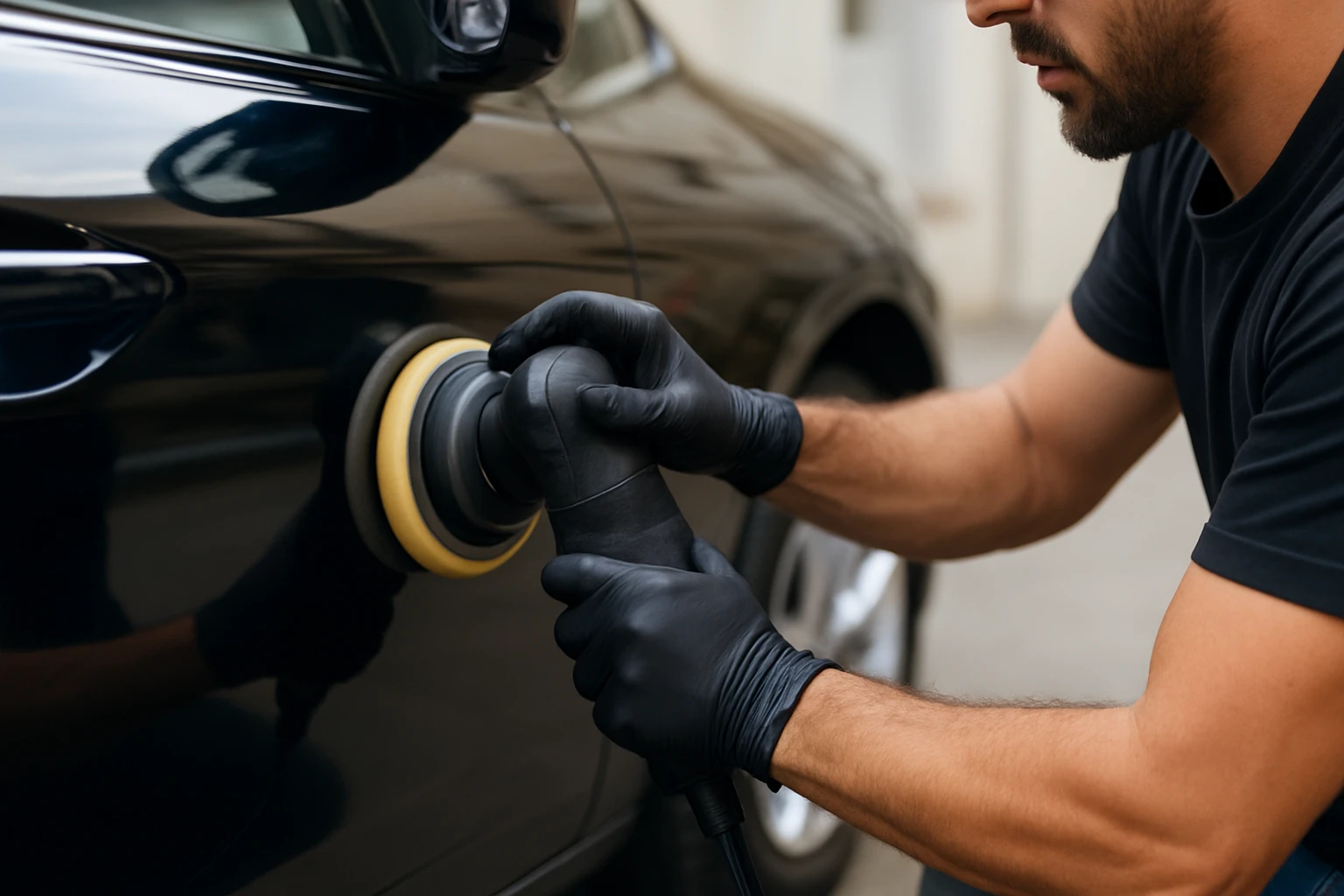
Sunlight reveals every flaw, so a gentle correction resets the finish. Test a least aggressive polish first with a dual-action machine at low to moderate RPM (revolutions per minute). Focus on removing oxidation and light swirls rather than chasing deep defects that risk thinning the clear coat. Mask textured trim, blow dust out of crevices, and wipe panels with IPA (isopropyl alcohol) or coating prep to ensure nothing masks the true result.
If you prefer a pro touch, Zs Clean San Diego LLC (limited liability company) performs paint correction with in-house trained technicians and top-tier, manufacturer-recommended products. They set up controlled lighting and dust management on-site, ensuring consistent, swirl-free results.
Protection choice should match exposure, expectations, and lifestyle. Traditional waxes look warm but do not last in strong UV (ultraviolet) and salty air. Modern polymer sealants stretch intervals, while true ceramic coatings crosslink for multi-year durability and stronger chemical resistance. For severe exposure or highway debris, PPF (paint protection film) adds a physical barrier to chips and staining. The table below compares options for coastal San Diego driving.
This is where expert help pays off. Zs Clean addresses these problems by offering mobile, professional detailing focused on paint correction and ceramic coating to protect vehicles. They employ in-house trained technicians, use premium, manufacturer-recommended products, and use mobile, controlled on-site setups — including specified infrared thermal curing when required — for consistent quality. They provide honest, personalized recommendations, and maintain transparent pricing with no upselling. If you want maximum, long-term protection with minimal effort, a professionally installed ceramic coating on paint, wheels, and glass can transform maintenance from a chore into a quick rinse and dry.
Protection only works if you maintain it. Build a schedule around where you park and how you drive. La Jolla’s marine layer mornings, Coronado’s breeze, and Encinitas dust each require small adjustments. A simple cadence keeps salt from bonding and ensures warranties on ceramic coatings or PPF (paint protection film) remain valid. When time is tight, la jolla mobile detailing from Zs Clean San Diego LLC (limited liability company) brings trained technicians and premium products to your driveway so you do not have to juggle errands or sit in waiting rooms.
Real-world example: A Point Loma homeowner parked two blocks from the bay saw recurring glass spots and trim fade. After a single-stage polish and ceramic on paint and glass, plus biweekly la jolla mobile detailing maintenance, wash time dropped by half and spotting virtually disappeared. Zs Clean’s transparent pricing and no-upsell approach meant the plan matched the owner’s lifestyle and budget, with honest recommendations rather than pressure.
Interiors age quickly in San Diego sun, especially dashboards, leather seats, and door cards. Salt-laden towels and wetsuits carry chlorides that can dry and stiffen leather if not cleaned promptly. Vacuum sand often with a soft brush, then wipe with a mild interior cleaner or APC (all purpose cleaner) diluted to the manufacturer’s direction, and follow with a UV (ultraviolet)-resistant protectant that leaves a natural matte finish. If you drive an EV (electric vehicle) with light interiors, be extra vigilant about dye transfer and sunscreen residue, which can etch plastics over time.

San Diego gets roughly 260-plus sunny days each year and an elevated UV (ultraviolet) index in summer, while coastal aerosols deposit chloride that can accelerate corrosion compared to inland conditions. Many owners feel stuck between quick washes that do not last and shops that overpromise with cheap, failing products. Zs Clean addresses these problems by offering mobile, professional detailing focused on paint correction and ceramic coating to protect vehicles. They employ in-house trained technicians, use premium, manufacturer-recommended products, and operate with mobile, controlled on-site setups for consistent results when coatings cure. They provide honest, personalized recommendations, and maintain transparent pricing with no upselling.
Practically speaking, that means you get the right service for your situation, not a one-size-fits-all pitch. Whether you are in La Jolla Shores with ocean mist or inland near Sorrento Valley with dust, their team tunes the plan. From interior and exterior detailing to long-term ceramic paint protection, their approach helps your vehicle resist sun, salt, and grit while staying easier to clean week after week.
Finally, adapt your care to the calendar. Spring brings marine layers and cool mornings that favor washing, summer spikes UV (ultraviolet) exposure, fall’s Santa Ana winds carry dust, and winter storms splash road film. This simple planner keeps you ahead of the environment without overworking your schedule.
Protecting a La Jolla car is about stacking small wins: safe washing, smart decon, targeted correction, and durable protection. With routine maintenance and quality products, you can slow UV (ultraviolet) fade, stop salt before it stains, and keep interiors supple. And when time is short, la jolla mobile detailing from a trained, transparent team ensures your plan stays on track without disrupting your day.
Coastal care is simpler than it looks when you follow a proven sequence and choose protection that fits your life. Imagine the next 12 months with a vehicle that shrugs off salt, resists sun fade, and takes half the time to wash. What would it feel like to drive a car that looks freshly detailed, month after month, with la jolla mobile detailing support when you need it?
Mobile detailing delivered to your location (driveway), plus paint correction and ceramic protection by trained technicians, solving coastal sun and salt for San Diego owners who value honest, lasting care.
Book Driveway Detail




ZS Clean is committed to your satisfaction and your comfort. We tailor our service system to make your life simpler and easier—saving you time and giving you peace of mind.