That Musty Smell in Your Car Has an Address. Let's Go Find It.
September 22, 2026


Here's an uncomfortable fact about noses: yours goes blind in your own car. You drive it every day, the smell moved in gradually, and your brain politely filed it under "normal."
Then a friend gets in, does the tiny pause, and says "huh" — and suddenly you can smell it too. Gym sock. Old towel. A hint of forgotten aquarium.
I meet that smell professionally several times a week, and I can tell you the good news up front: musty smells aren't mysteries. They have addresses. There are exactly four places that smell lives in a car, and each one gives itself away if you know what to ask. So let's play detective for five minutes before anyone spends a dollar.
When you smell itPrime suspectYour moveOnly when the AC or fan first kicks on, then it fadesMildew on the AC evaporatorEvaporator treatment + the fan-only habit (below)All the time, and worse after the car sits closed upDamp carpet, padding, or upholsteryFind the moisture, then extract and enzyme-cleanOnly after rain or a car washClogged sunroof or door drains, or a leaking sealClear the drains, check the trunk wellStrong at the vents and you can't remember ever changing the cabin filterA swampy cabin air filterReplace it today — it's a $15–$30 part
If two rows feel true at once, start with the cheapest suspect and work up. That's not just frugality — it's usually the right diagnostic order too.
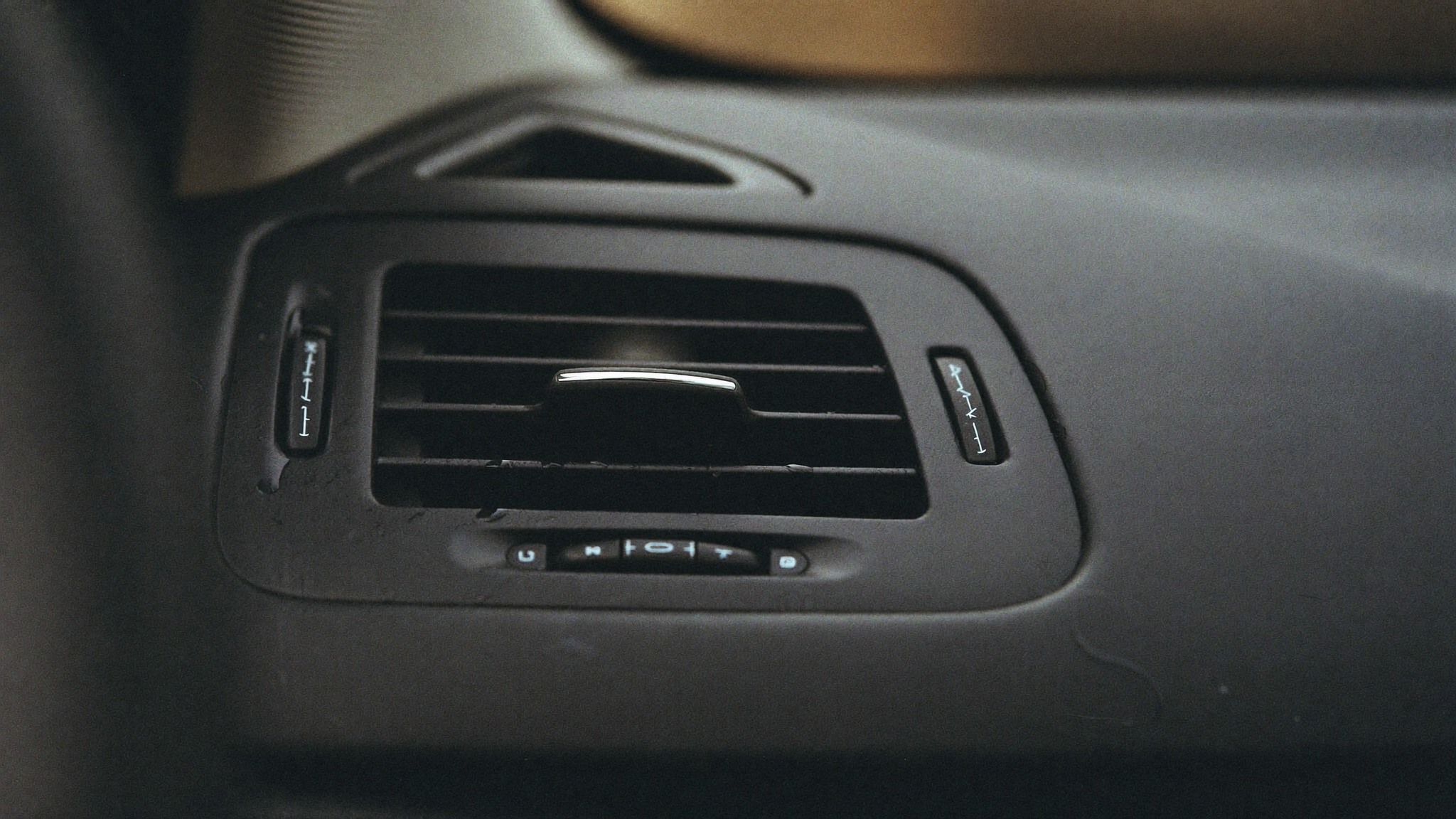
Deep behind your dashboard is the AC evaporator — a cold, wet piece of metal in a dark plastic box. Every time you run the AC, it condenses moisture out of the air, which is why parked cars drip water on hot days. Cold, damp, dark, undisturbed: if you wanted to design a luxury condo for mildew, this is the floor plan. The EPA's guidance on mold is blunt about it — where there's persistent moisture, mold follows — and it applies to a dashboard just as well as a bathroom.
San Diego makes it worse in a way most of the country doesn't deal with: our mornings arrive pre-moistened. That blanket of coastal gray — NOAA has a whole explainer on the marine layer — keeps coastal cars damp inside and out for hours a day from May through September. Cars in Carlsbad whiff faster than cars in Ramona. It's not your imagination.
The free fix that prevents most of it: for the last two minutes of your drive, turn the AC compressor off and run the fan alone. It dries the evaporator before the car sits. Do it consistently and you starve the colony.
The real fix once it's established: a foaming evaporator cleaner applied through the system — this is where DIY gets awkward, because reaching the evaporator properly matters more than what's in the can.
Somewhere behind your glovebox is a pleated filter that has been quietly eating everything the air brought in — marine layer moisture, canyon dust, wind-season grit, eucalyptus confetti — since the day it was installed. Which, for a lot of cars I open up, appears to have been during a previous presidential administration.
A damp, dirty filter doesn't just stop cleaning the air. It becomes the smell. AAA pegs replacement at every 15,000 to 30,000 miles, and I'd lean toward the early end of that range for coastal cars. It's a ten-minute job on most vehicles, the part costs less than lunch for two, and I've watched a filter swap solve a "mystery smell" more times than any other single fix.
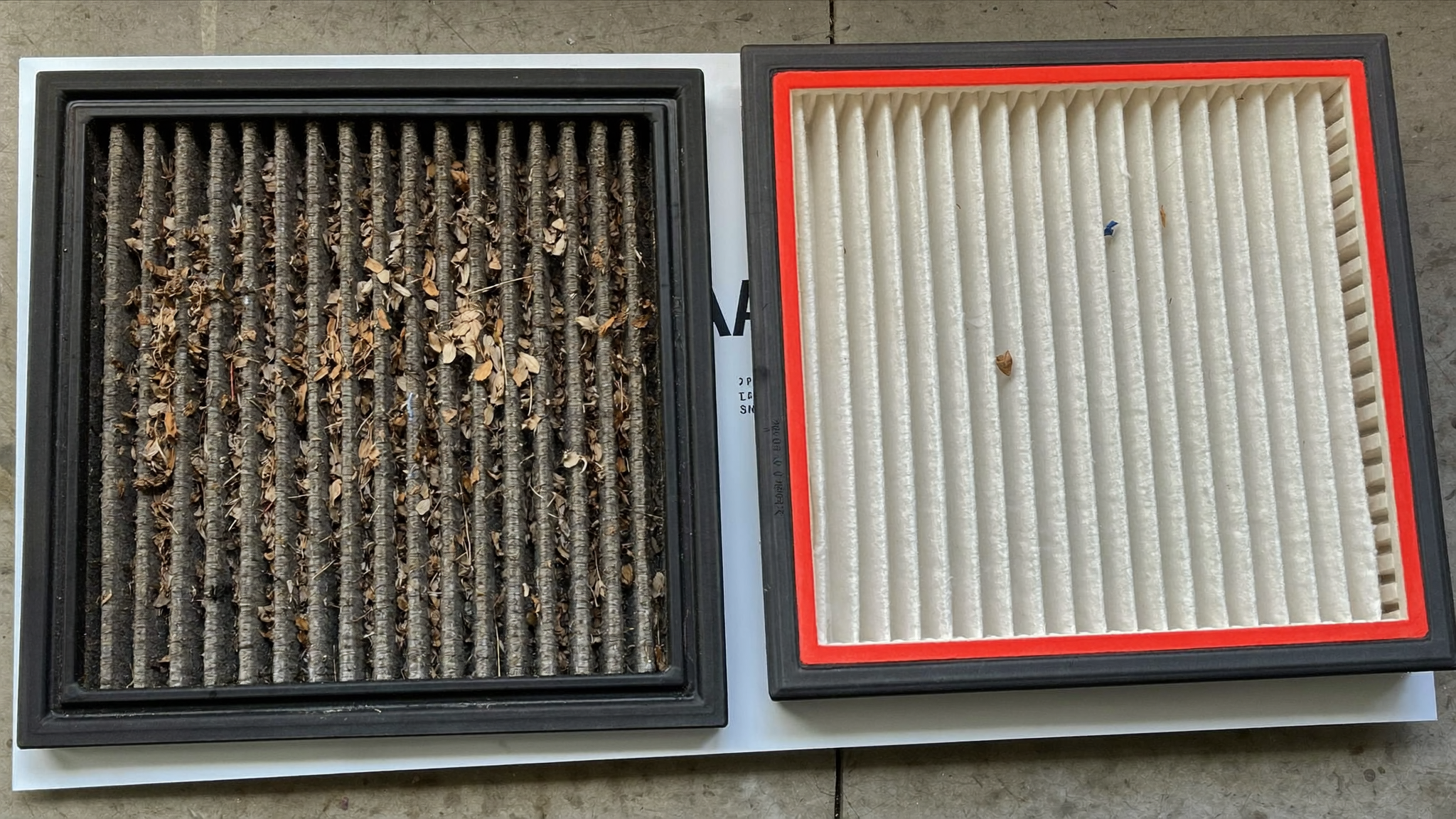
If you do exactly one thing from this article, open the glovebox and look at your filter. If it's gray and furry, you may have already found the body.
Suspect #3: Water That Moved In
This is the sneaky one, and October is its favorite month.
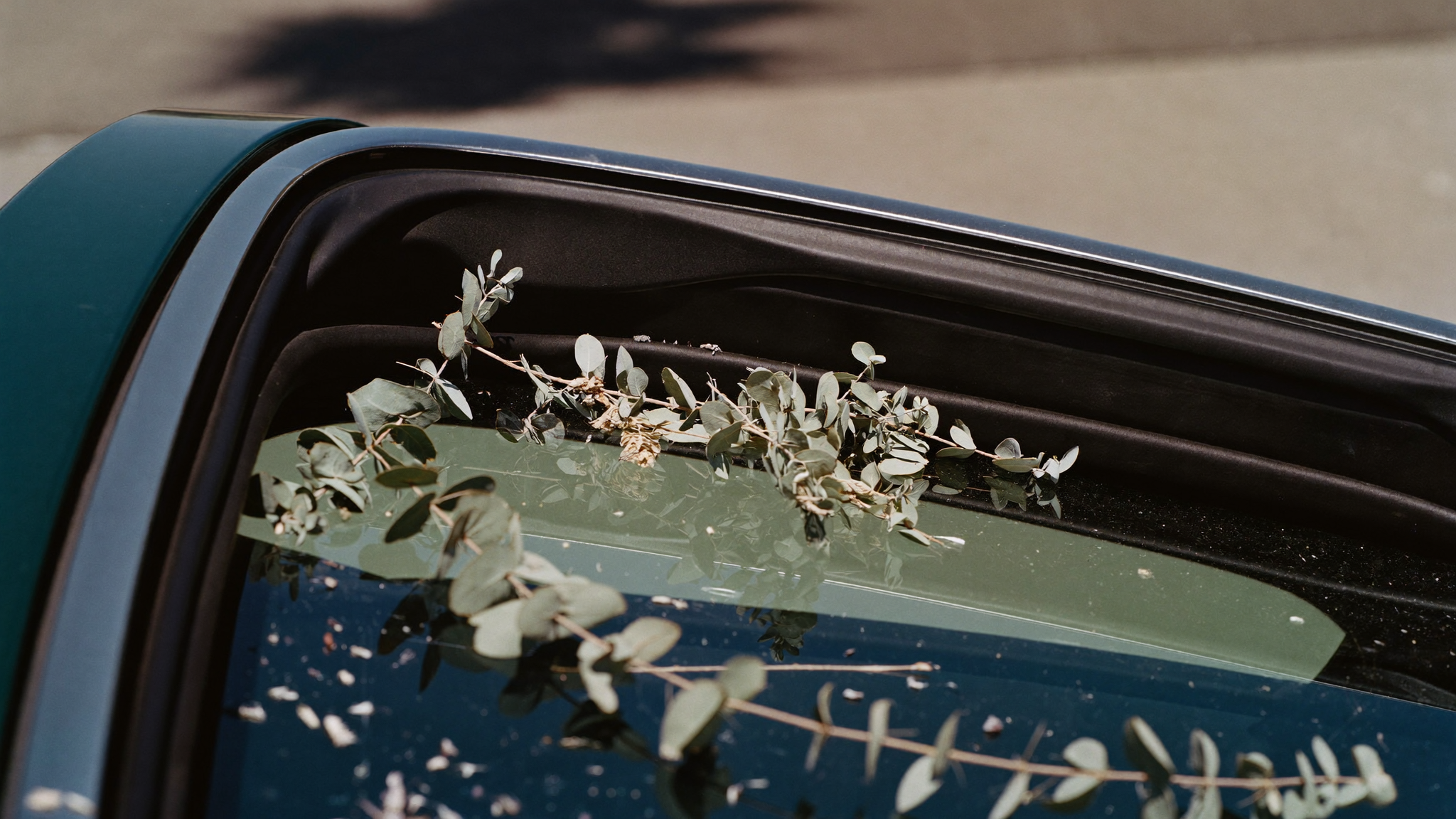
Your sunroof isn't sealed like a submarine hatch — it's designed to let a little water in and drain it out through small tubes in the pillars. All summer, those tubes have been quietly collecting tree debris. Then the first real rain of the season shows up and finds out for you: the drains overflow, water follows the headliner down the pillar, and it lands in your carpet padding, where it stays.
Wet padding is the forever-musty smell. The carpet surface dries; the sponge underneath doesn't. Same story for the trunk's spare-tire well, which I regularly open to find a small private lake nobody knew about.
And then there are the self-inflicted ones, which in San Diego means: the beach towel that's been in the back seat for three weeks, the wetsuit "drying" in the trunk, the dog towel from Del Mar. You know the one. Every coastal detailer knows the one.
The moves: test your sunroof drains with a slow trickle of water (never a coat hanger — you can puncture a tube), lift the trunk floor after the first rain, and if carpet got soaked, it needs real extraction, not a sunny afternoon with the doors open.
Rung 1 — Free: the fan-only habit for your last two minutes of driving, and evict all damp fabric the day it gets damp.
Rung 2 — About $20: cabin air filter. Just do it. Set a reminder for next year.
Rung 3 — Under $50: an enzyme cleaner on any damp carpet or fabric you found — enzymes digest the source instead of perfuming over it. I've broken down what actually works on car smells and what's marketing if you want the full field guide.
Rung 4 — Pro territory: evaporator foam service and hot-water extraction of carpet and padding — this is the heart of a full interior detail, and it's the step that actually removes what you've been smelling.
Rung 5 — The full reset: when a smell has had months to soak into every soft surface, extraction plus an ozone treatment resets the interior to zero. One honest warning, because I'd rather lose the booking than your trust: ozone kills the smell, not the cause. If the moisture source is still there, the smell re-signs the lease. Dry first, always.
Why does my car only smell musty when the AC first turns on?Because the blast of air is picking the smell up off a damp evaporator and delivering it to your face. It fades as the coil dries out mid-drive. That fade is the fingerprint — it tells you the address.
Does spraying vinegar or odor eliminator into the vents work?It reaches the first six inches of a system that's several feet deep. You'll get a vinegar car for a day, then the mildew resumes broadcasting. Surface sprays are for surfaces; the evaporator needs to be treated where it lives.
Is the mildew in my AC dangerous?It's the same everyday household variety the EPA guidance covers — for most people it's an annoyance, but it's a genuine irritant if you or your passengers deal with allergies or asthma. Either way, it's not a "live with it" smell. It's a "fix it this month" smell.
What does it cost to fix professionally?Depends entirely on which suspect it is, which is why the sniff test comes first. A filter is $30-ish. Evaporator service and extraction land mid-range. A full reset with ozone is the top rung. Anyone who quotes you the top rung before finding the source is selling, not diagnosing — get the diagnosis first, from us or from anyone.
Every musty car I've ever met was just a moisture problem with good hiding skills. Find the water, and the smell packs its bags.
So this week: two minutes of fan-only, one peek at the cabin filter, one trickle test for the sunroof, one look under the trunk floor.
And wash the beach towel. You know the one.




ZS Clean is committed to your satisfaction and your comfort. We tailor our service system to make your life simpler and easier—saving you time and giving you peace of mind.