The "Life Reset" Checklist That Finally Saved Me From My Own Chaos
December 2, 2025

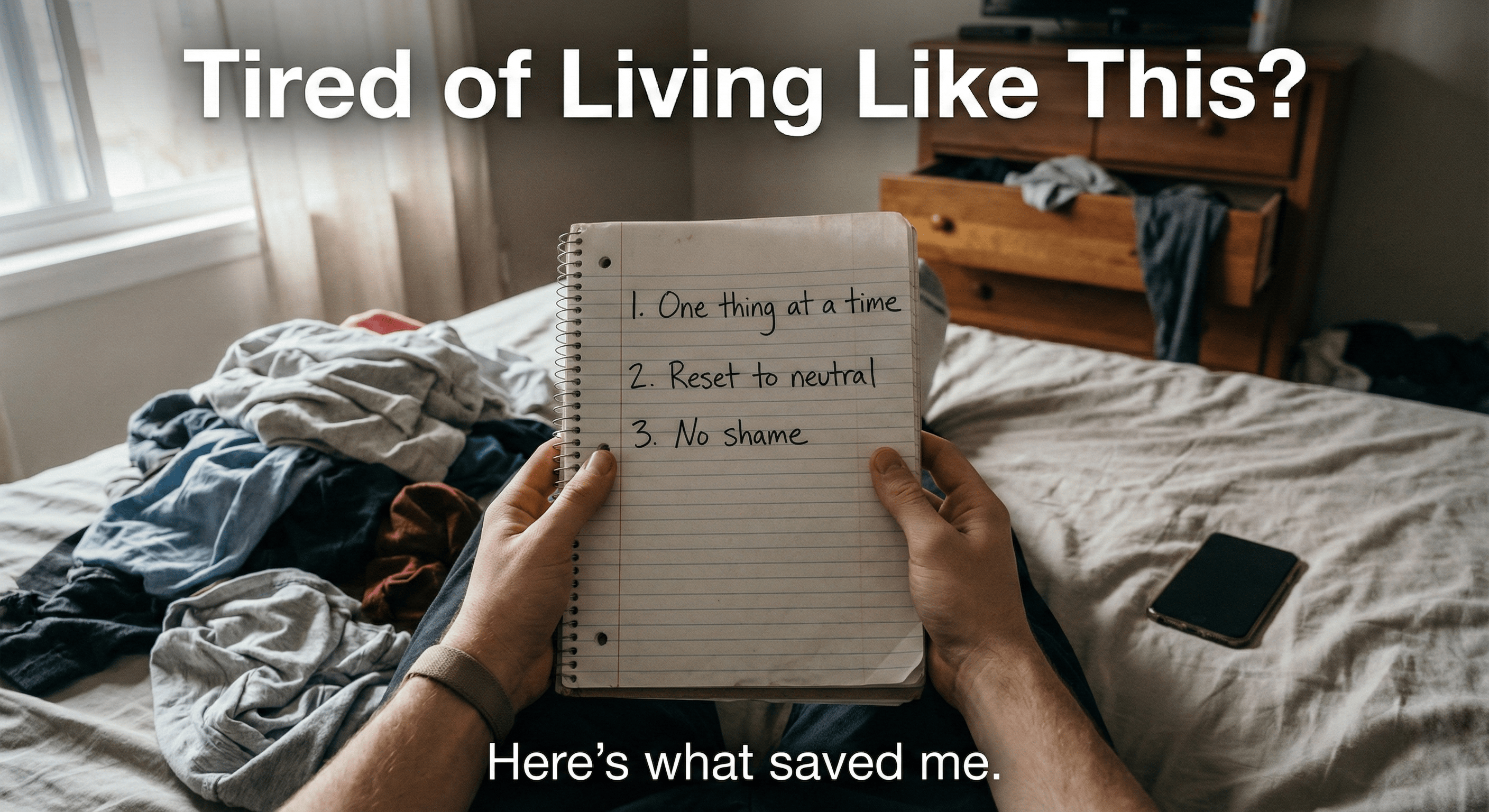
There are thousands of videos on YouTube, Instagram, and TikTok about discipline. They all say the same thing: Discipline will change your life.
That part is true. But what nobody tells you is how hard it actually is.
They sell you this fantasy that once you "decide" to be disciplined, it’ll happen fast. I believed it. Every scroll on TikTok, every scroll on IG—inspirational videos, people yelling at you, a lot of David Goggins energy telling you to stay hard.
But it’s not easy. It’s not impossible, but it is absolutely not easy.
I lived through months of this cycle. I would get motivated at 2:00 AM, write out a perfect schedule, and crush it for three days. Then, on Day Four, I’d slip. Maybe I was tired, maybe I was stressed. I’d spend the whole day watching TikTok and eating takeout.
And then the shame would hit.
What I realized is that shame destroys progress. Shame makes you stop caring. Shame kills discipline.
After months of struggle—days on, days off, failing, and restarting—I finally found something that worked. It wasn’t "more motivation." It wasn’t yelling at myself in the mirror. It was a simple, forgiving, structural checklist that accepts the fact that I am human.
When I was at my lowest, I started studying people who were operating at a level I couldn't comprehend. I looked at people like Elon Musk, Donald Trump, and high-level CEOs.
Put politics and personality aside for a second and look at their schedules. It is pure chaos. They are making billion-dollar decisions, flying across time zones, and dealing with massive crises daily.
I realized something: They don't rely on willpower to find their keys.
High performers survive because they remove friction. They treat their environment—their offices, their homes, their cars—as a machine that supports them. If your environment is messy, your brain is messy.
Psychologists call this Cognitive Load. Every pile of laundry, every dirty dish, and every piece of trash in your car takes up a tiny bit of RAM in your brain. If you are living in chaos, you are running on 50% battery before you even start your day.
I used to think being messy was a personality trait. I thought, “I’m just a creative, chaotic person.”
That was a lie I told myself to avoid the work.
The truth? I was failing because I was trying to be perfect. I thought "getting organized" meant spending six hours cleaning my house on a Saturday. But that’s not a system; that’s an event. And because I hated the event, I never did it.
I learned from reading habits experts (like James Clear and BJ Fogg) that if a habit is hard, you won't do it. You have to make it stupidly easy.
The breakthrough happened when I stopped trying to be "clean" and started trying to be "functional."
I stopped trying to impress imaginary guests and started trying to be kind to my future self. I realized that discipline isn't about punishment; it's about self-respect.
It took me months to distill this down, but I created a "Life Reset Checklist." It is designed for people like us—people who are messy, busy, and tired of failing.
This is not a cleaning guide. This is a survival guide.
Do not aim for perfection. Aim for "reset to neutral."
This is the most important part. This is where you forgive yourself for the week's mess.
Your car and your room are mirrors of your mental state.
This is the mental part of the checklist.
This system feels rare to me because it acknowledges that we aren't robots.
You have to accept the truth: You might be lazy sometimes. You’re not perfect. But you CAN be better.
The goal isn't to become a Navy SEAL overnight. The goal is to stop drowning. Start with the "Never Empty-Handed" rule today. Just one small thing.
It took me a long time to learn this, but the magic isn't in the massive effort. It's in the refusal to let one bad day destroy your progress.



ZS Clean is committed to your satisfaction and your comfort. We tailor our service system to make your life simpler and easier—saving you time and giving you peace of mind.